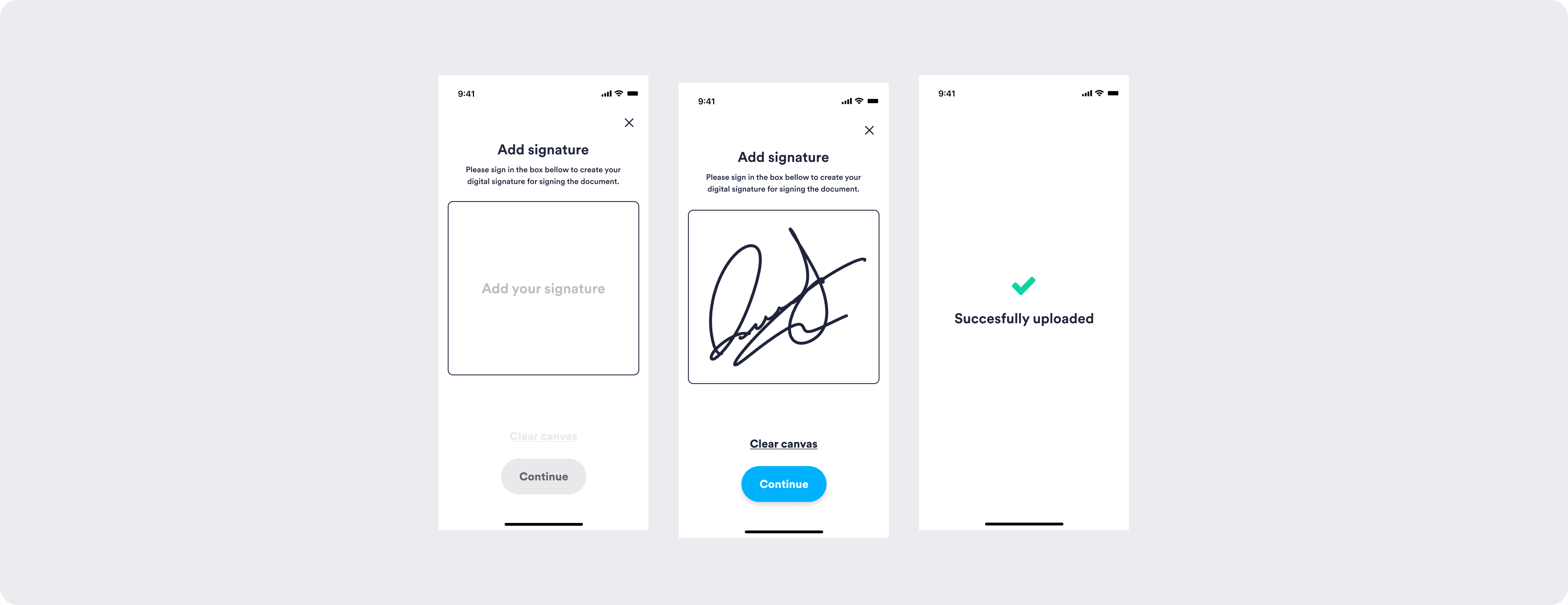
In V1, the Electronic Signature experience presents a functional but generic capture flow. The screen focuses on collecting the user's signature with a basic canvas, minimal instruction text, and a simple "Continue" button. Processing and success states are simple and isolated, with little continuity between steps. The experience feels transactional, with basic feedback once the signature is submitted.
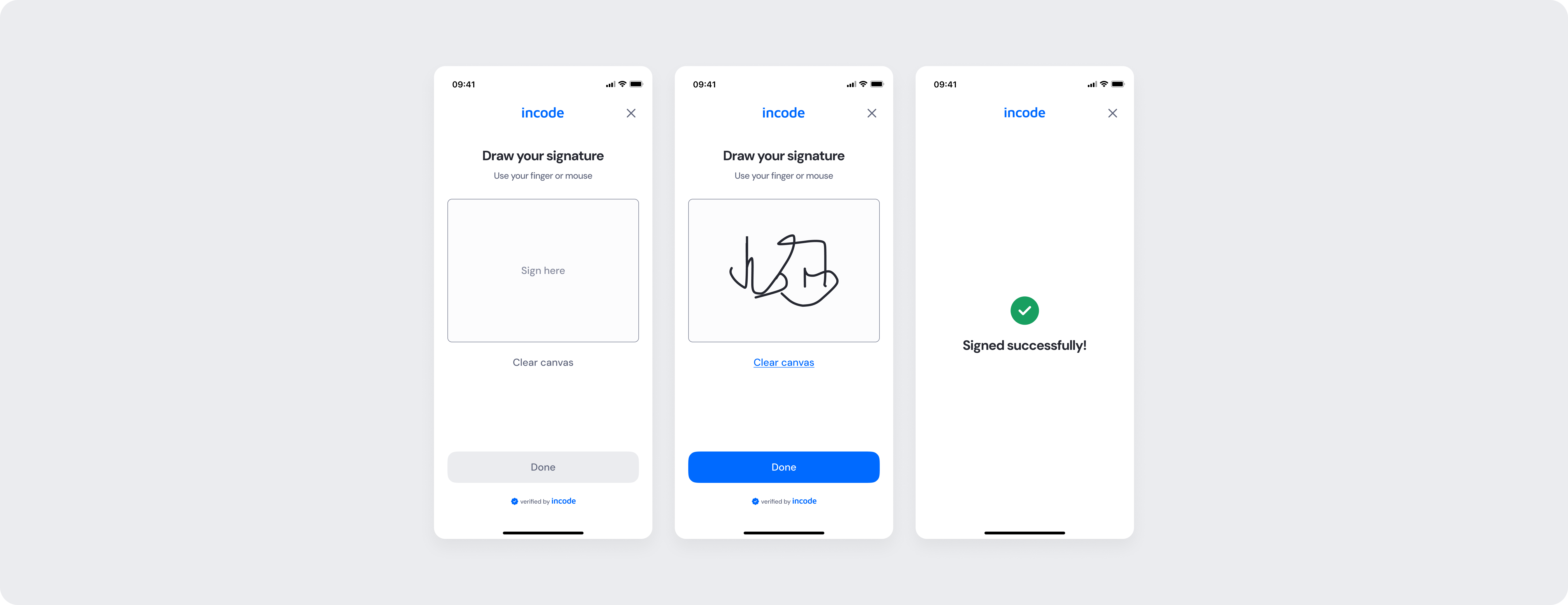
In V2, the Electronic Signature experience introduces a more structured, branded, and guided flow. The interface includes clearer instructional hierarchy, a "Verified by Incode" trust badge, and distinct visual states for the canvas, "Clear canvas" action, and "Done" button. Processing and success states feel more cohesive with smoother visual transitions and clearer confirmation messaging, making the flow feel complete and intentional.
Feature Comparison
Functional capabilities of the module (objective features only; no UX or performance differences).
| Capabilities | V1 | V2 | Notes |
|---|---|---|---|
| Signature experience | ✅ | ✅ | Core functionality present in both versions. |
| Customization options | ❌ | ✅ | V1 provides limited customization options, while V2 allows full control over text, colors, buttons, illustrations, and behavior. |
| Documentation completeness | ❌ | ✅ | V2 provides complete, standardized documentation coverage. |
Behavior Differences
How the module behaves during runtime.
| Behavior | V1 | V2 | Notes |
|---|---|---|---|
| State transitions | Default transitions | Specifically designed screen-by-screen transitions for smoothness | V2 includes transition guidelines as part of the module documentation package. |
| Processing behavior | Static processing screen | Branded processing state with consistent loading behavior | V2 aligns loading behavior with the overall system patterns |
Customization Overview
Customization in V2 is significantly simpler and more consistent across modules.
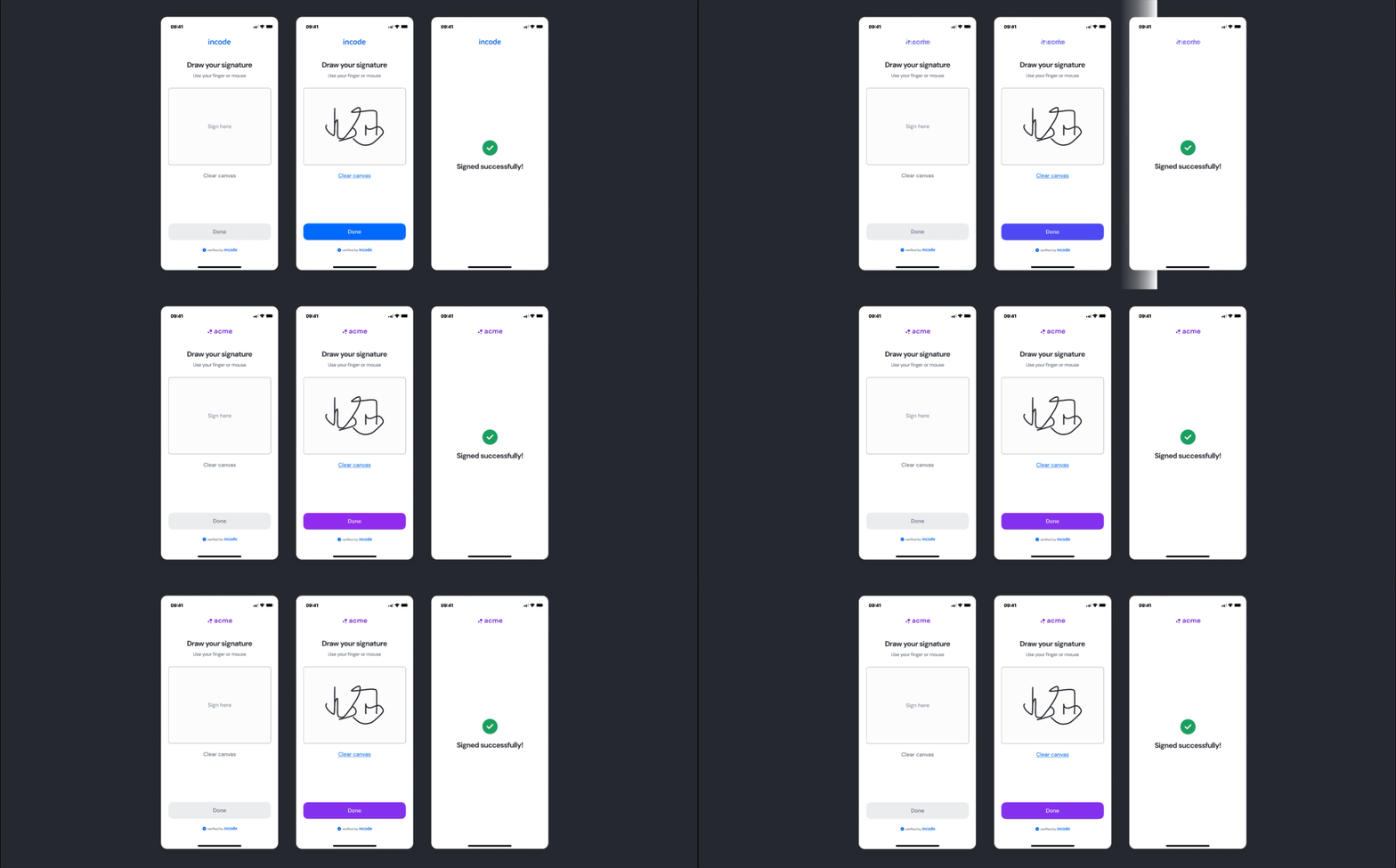
Instead of having isolated configuration options per screen or component, V2 uses a unified token-based system that allows developers to control visuals, behaviors, and experience patterns with fewer parameters and predictable outcomes.
This means:
- Less engineering work to override UI elements
- Consistent branding across modules
- Predictable behavior when changing settings
- Reduced risk of breaking flows
- Clear separation between visual tokens and experience configuration
V2 also centralizes all customization options under a single structure, so developers always know where to look and what they can modify.